
Finished Steel Plates Ready for Machining: What to Specify
Ordering a finished plate starts with a clear definition of what happens next. Learn how to specify material, final dimensions, preparation and inspection before requesting a quotation.
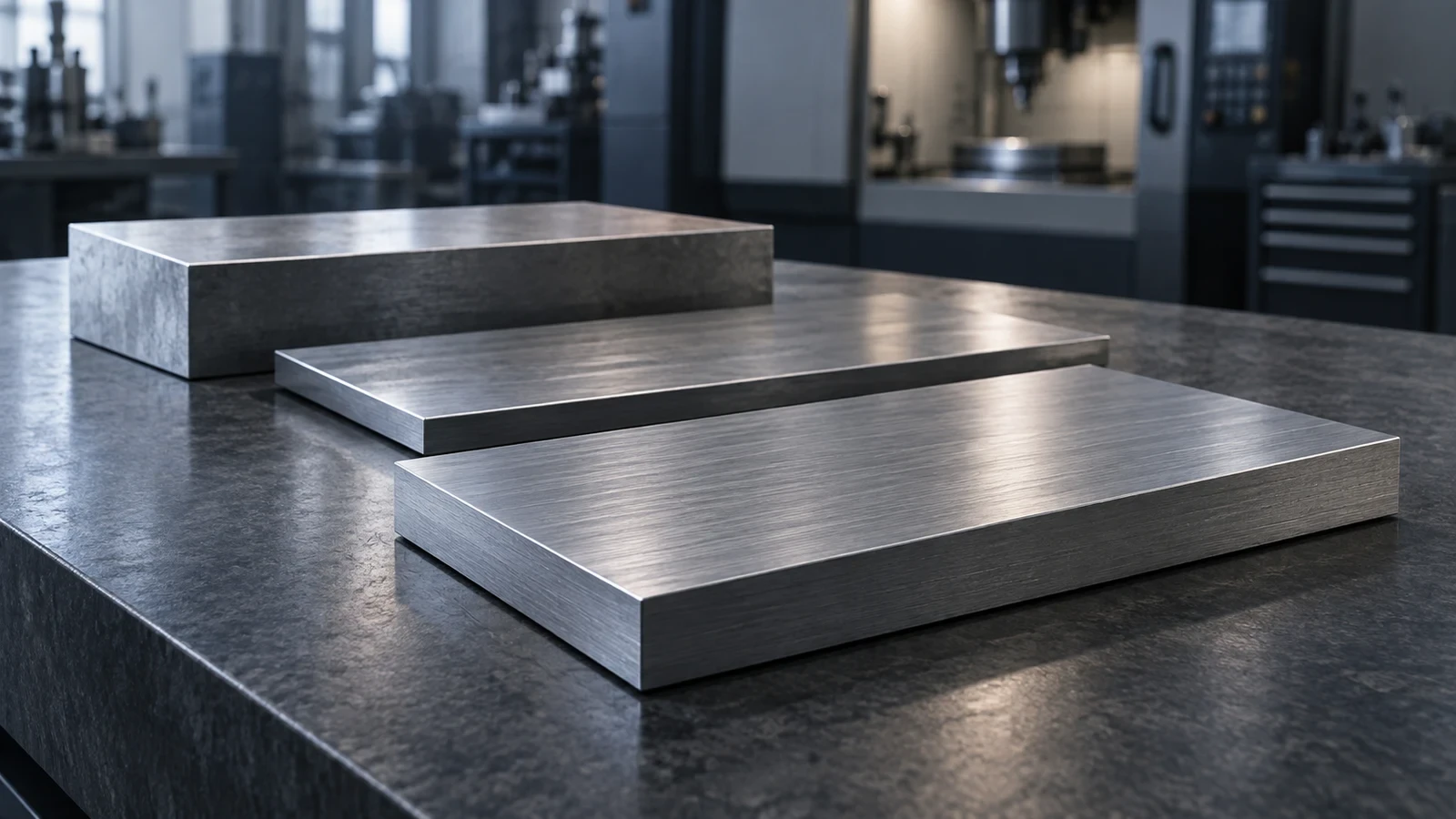
A plate can arrive at the correct nominal size and still leave your workshop with preparation work. The useful question when ordering is: what condition must the plate be in before our next operation can start? That answer turns ‘ready for machining’ from a broad description into a requirement both buyer and supplier can check.
Define the next operation first
Write down whether you will drill holes, machine a pocket, make a fixture or assemble the plate into a tool. Then identify the faces you intend to locate or clamp against. This helps you decide whether a cut blank is sufficient or whether you want shaping and surface grinding completed before delivery. A prepared plate still needs any holes, cavities or features that are outside the agreed supply scope.
Cut blanks and prepared plates serve different needs
- Choose a cut blank when your workshop plans to establish the required faces and dimensions itself. State the blank dimensions and the work you intend to leave for later.
- Choose shaped and surface-ground preparation when you want those preparation stages included in the quotation. Confirm which faces are included.
- For either route, agree the dimensions and acceptance requirements in writing. A preparation label alone does not specify a tolerance.
Material grade and condition also matter to the preparation route. Uddeholm explains that tool steels can require different grinding choices from conventional structural steels. Tell the supplier the specified grade and any hardness or heat-treatment requirement, rather than assuming all steel plates can follow the same process.
Technical reference: Uddeholm — Grinding of Tool Steel
Agree which faces and preparation stages are included. Holes, pockets and further machining need their own supply scope.
Send a specification that can be checked
- Identify the part: give it a name, drawing number and revision.
- State the material: include the grade and required supply condition; request documentation if your job needs it.
- Give the final size: label length, width and thickness in millimetres, and specify quantity separately.
- Define critical requirements: identify the faces and features with dimensional, flatness, parallelism or surface-finish requirements.
- List the supply scope: preparation, additional machining, inspection records and any work your own team will complete.
Do not rely on a 3D image to communicate a critical tolerance. Put that requirement on the drawing and confirm it in the quotation. Protolabs similarly asks customers to identify features requiring tighter tolerances on a technical drawing; its published service tolerances are specific to its own offering.
Technical reference: Protolabs — specifying precision-machining tolerances
An example enquiry keeps final dimensions, quantity, material and drawing requirements together. Dimensions shown are illustrative.
A practical enquiry example
An enquiry might say: ‘Fixture plate FP-12, drawing revision C, two pieces, specified steel grade, final size 250 × 200 × 30 mm, shaped and surface ground. Critical face requirements are marked on the attached drawing. Pocket machining will be completed by our workshop.’ This is an example of the information to send, not a standard tolerance or a production promise.
Check the quotation against the next operation
Before approving, confirm whether the stated price covers the preparation you requested and whether any finishing remains with you. On receipt, match the part identity, quantity and inspection requirements to the approved revision. A clear handover is more useful than a general ‘finished’ description when the plate moves from purchasing to the machine operator.
Use Deulec’s Plates & Bars configurator to select the plate category, material, dimensions, quantity and preparation. Use the calculators below for planning, then share the drawing requirements with your quotation request. The confirmed quotation should define the final scope, price and delivery details.
Plates & Bars
Turn your requirements into a personal quotation.
Put your numbers to work.
Free tools for your next requirement.