
Steel Plate Prices: Compare Cost per kg and Cost per Finished Piece
A lower material rate does not always mean a lower finished-plate cost. Compare the chargeable weight, preparation scope and quantity using one consistent calculation.
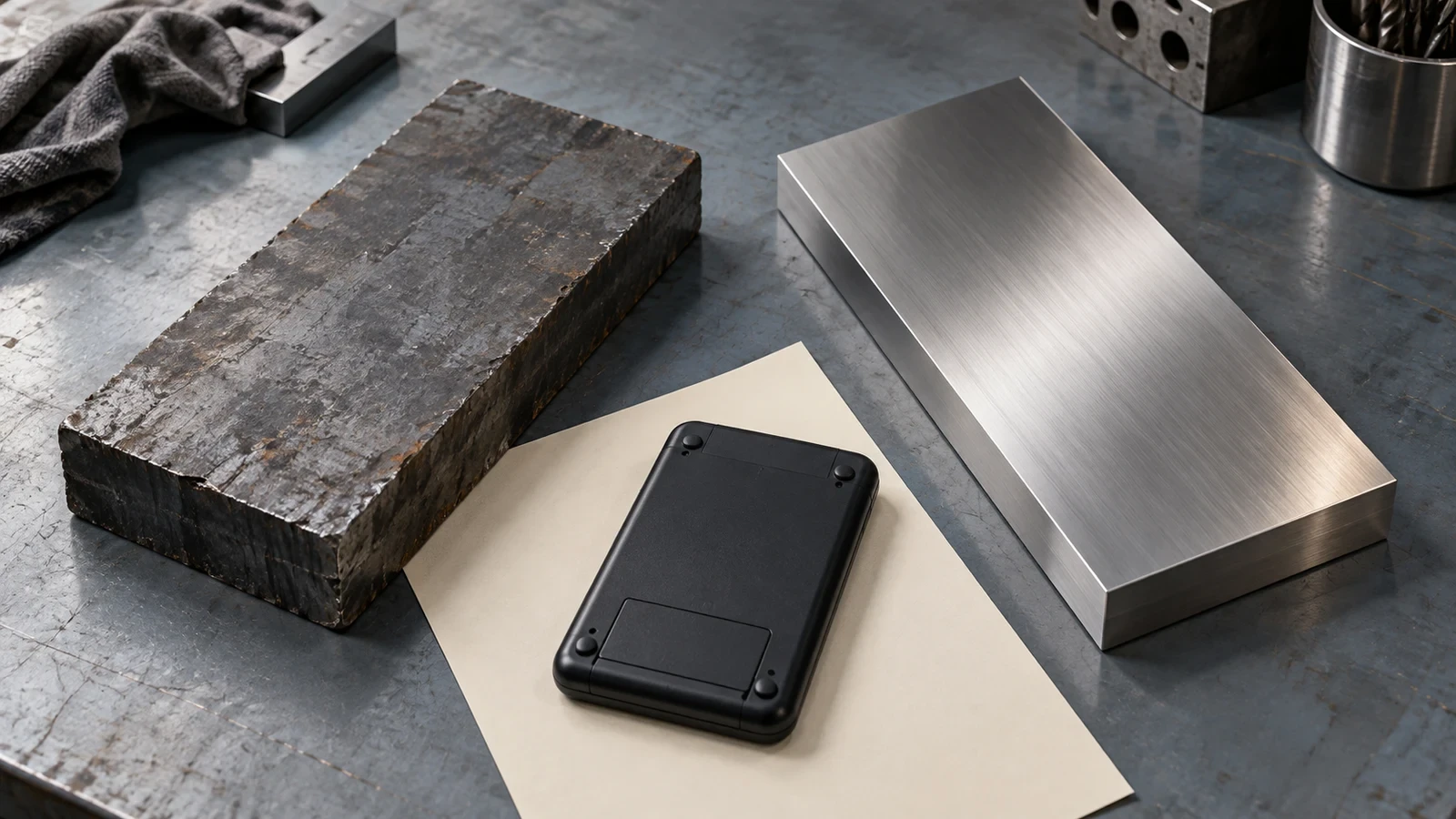
Two plate quotations can show different prices because they describe different supplies. One may cover a cut blank priced by weight; another may include preparation to agreed final dimensions. Before comparing the totals, put both quotations on the same basis: the same part, quantity and completed work.
Identify which weight is being charged
Ask whether the material line uses the purchased blank weight, the finished weight or another agreed billing basis. A rate per kilogram is incomplete without that information. If the price is per piece, ask what that piece includes: material only, prepared faces, or additional machining and inspection.
For an estimate based on raw material, use the chargeable raw weight multiplied by the material rate, then add the stated preparation charge. Dividing that subtotal by finished weight produces a useful comparison figure. Label it ‘cost per finished kg’ so nobody mistakes it for the supplier’s raw-material rate.
Confirm the chargeable weight before comparing the rate per kilogram. Raw blank weight and finished weight describe different stages.
A worked example with hypothetical prices
- Assumed chargeable blank weight: 20 kg per piece.
- Assumed material rate: ₹80 per kg. Material amount: 20 × ₹80 = ₹1,600 per piece.
- Assumed preparation charge: ₹500 per piece. Material plus preparation: ₹2,100 per piece.
- Assumed final weight: 18 kg per piece. Comparable cost per finished kg: ₹2,100 ÷ 18 = ₹116.67, rounded.
- For three identical pieces, material plus preparation totals ₹6,300 before any other quoted charges.
These figures are invented to explain the method; they are not current material rates or a Deulec quotation. The ₹116.67 figure includes preparation in its numerator. Comparing it directly with an ₹80 raw-material rate would mix two different measures.
Example only: material and preparation total ₹2,100 per piece. Dividing by 18 kg final weight gives ₹116.67 per finished kg, before other charges.
Compare the preparation scope separately
Put each supplier’s included work beside the price. If one offer stops at a cut blank and another includes shaping and surface grinding, estimate the remaining work before deciding which suits your workshop. If you do the preparation yourself, include your own expected machine time and handling in the internal comparison rather than treating them as free.
- Use the same material grade and supply condition for each comparison.
- Check the same final dimensions, drawing revision and critical tolerances.
- Confirm the preparation stages and faces included.
- Separate price per piece from the total for the ordered quantity.
- List freight, packing, taxes and any other quoted charges consistently.
- Compare the agreed delivery and inspection requirements as well as the amount.
Keep the estimate linked to the part revision
If thickness, quantity or preparation changes, recalculate using the revised inputs. For theoretical weight, volume and density must use compatible units. SSAB’s approximate general steel density provides a reference, but an actual estimate should use the value applicable to the chosen material. The weight calculator makes that calculation easier; it does not determine the invoice’s billing basis.
Density reference: SSAB — 20 questions about steel
Turn a comparison into a clear enquiry
Send a named part list with material, dimensions, quantity, preparation and drawing references. Ask for any exclusions to be stated with the price. A buyer can then compare like-for-like supply instead of chasing the lowest visible rate and discovering missing work later.
Use Deulec’s weight and shaping calculators to explore your requirement, then configure the plates for a personal quotation. Keep the confirmed order amount as the commercial reference; calculator results are planning estimates that depend on the inputs used.
Plates & Bars
Turn your requirements into a personal quotation.
Put your numbers to work.
Free tools for your next requirement.