
Steel Plate Weight Calculator: Formula and Worked Examples
Calculate the theoretical weight of rectangular plates, round plates, rings and bars. Follow a worked example in millimetres, then use the free calculator for your own sizes.
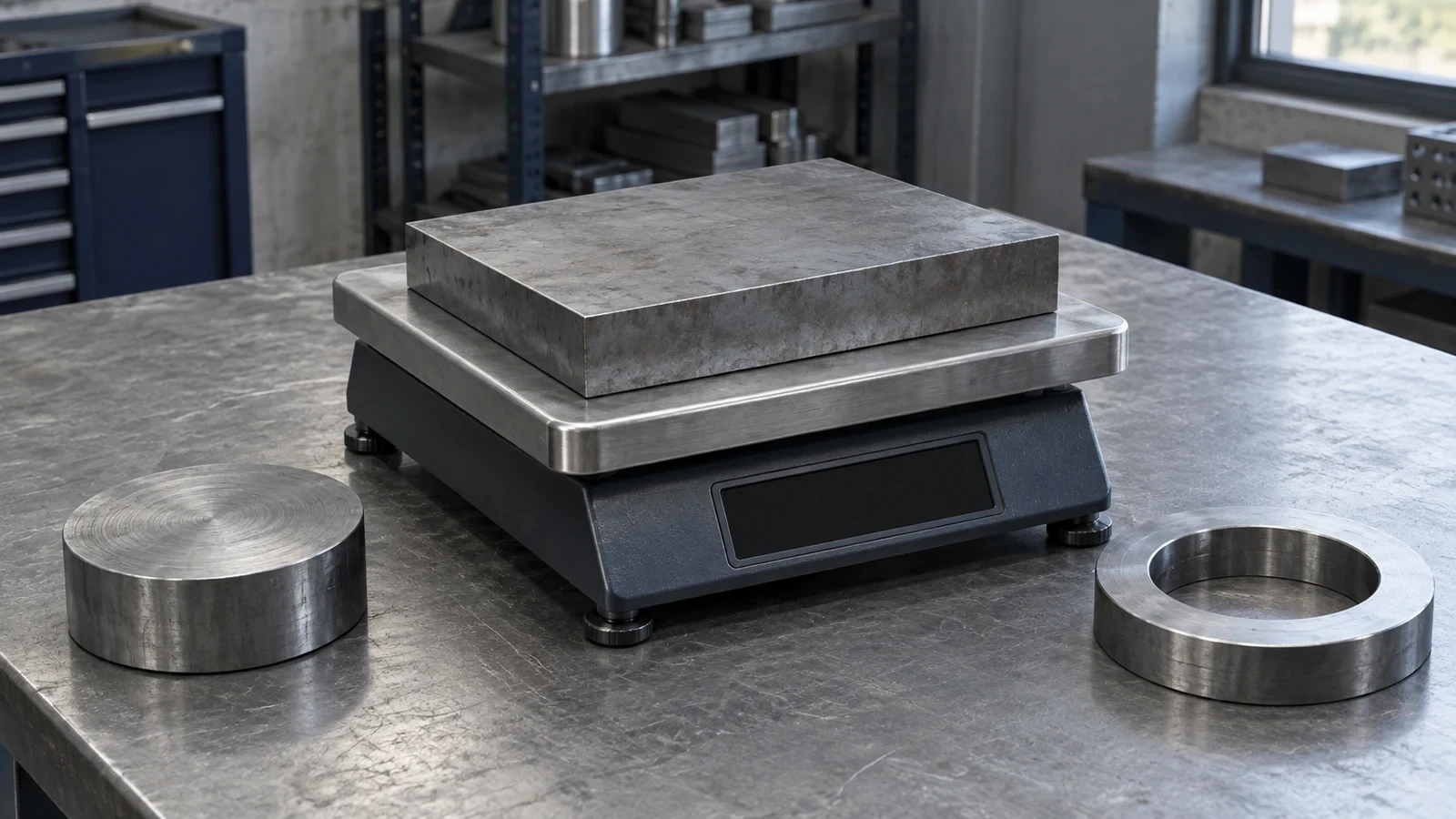
Theoretical weight is a useful starting point for comparing plate sizes, planning a material purchase and estimating a rate-based material cost. Start with the shape and dimensions, calculate the volume, then multiply by the material density. Keep the units consistent before multiplying by the number of pieces.
Rectangular plate weight in kilograms
Weight per plate (kg) = length (mm) × width (mm) × thickness (mm) × density (kg/m³) ÷ 1,000,000,000. The division converts cubic millimetres to cubic metres. If you instead enter all dimensions in metres, multiply their volume directly by density in kg/m³.
For the worked examples here, use an illustrative steel density of 7,850 kg/m³. SSAB gives approximately 7.85 g/cm³ for steel, which is the same density in different units. Use the density applicable to your selected material for an actual estimate; a general steel value should not replace grade-specific data.
Density reference: SSAB — 20 questions about steel
Example: two plates, 300 × 200 × 25 mm
- Volume per plate: 300 × 200 × 25 = 1,500,000 mm³.
- Convert to cubic metres: 1,500,000 ÷ 1,000,000,000 = 0.0015 m³.
- Weight per plate: 0.0015 × 7,850 = 11.775 kg.
- Weight for two plates: 11.775 × 2 = 23.55 kg.
If a hypothetical material rate is ₹100 per kg, the corresponding theoretical material amount is ₹1,177.50 per plate or ₹2,355 for two. This is a calculation example, not a Deulec price. Preparation, chargeable blank size, taxes and delivery need to be considered separately in a quotation.
Try these dimensions in the metal weight and price calculator
The worked example gives 11.775 kg per plate and 23.55 kg for two. Use the actual grade density for your own estimate.
Round plates, rings and round bars
- Round plate volume: π ÷ 4 × diameter² × thickness.
- Ring plate volume: π ÷ 4 × (outer diameter² − inner diameter²) × thickness.
- Round bar volume: π ÷ 4 × diameter² × length.
- For dimensions in millimetres, multiply each volume by density in kg/m³ and divide by 1,000,000,000 to obtain kilograms.
For a solid round plate of diameter 200 mm and thickness 20 mm, the volume is approximately 628,318.53 mm³. At the example density, the theoretical weight is about 4.93 kg. Enter diameter rather than radius: using half the correct diameter would reduce the calculated circular area to one quarter.
Use diameter rather than radius. A ring calculation also subtracts the centre opening; all dimensions must use consistent units.
Why your measured weight may differ
A basic shape calculation represents the dimensions you entered. A plate with machined pockets or holes is not a solid rectangular block of the same outer size. Likewise, a raw blank and the finished plate have different volumes. Check whether your calculation describes the purchased blank, an intermediate part or the final component before comparing it with a scale reading.
Do not round every intermediate step if you are calculating a batch. Keep the available precision during multiplication and round the displayed result at the end. The calculator is a planning tool; use the agreed weighing and billing basis for the actual purchase.
Calculate your requirement, then configure it
Select the matching profile and material in Deulec’s calculator, enter the dimensions and quantity, and check the units shown. If you are buying plates, carry the same material and final dimensions into the Plates & Bars configurator. State the preparation required so the quotation covers the plate you actually need.
Plates & Bars
Turn your requirements into a personal quotation.
Put your numbers to work.
Free tools for your next requirement.