
Choosing Steel for Mold Plates: Grade, Hardness and Supply Condition
A material name alone is not a complete plate specification. Learn how component duty, grade, delivery hardness and supply condition affect your steel enquiry and preparation plan.
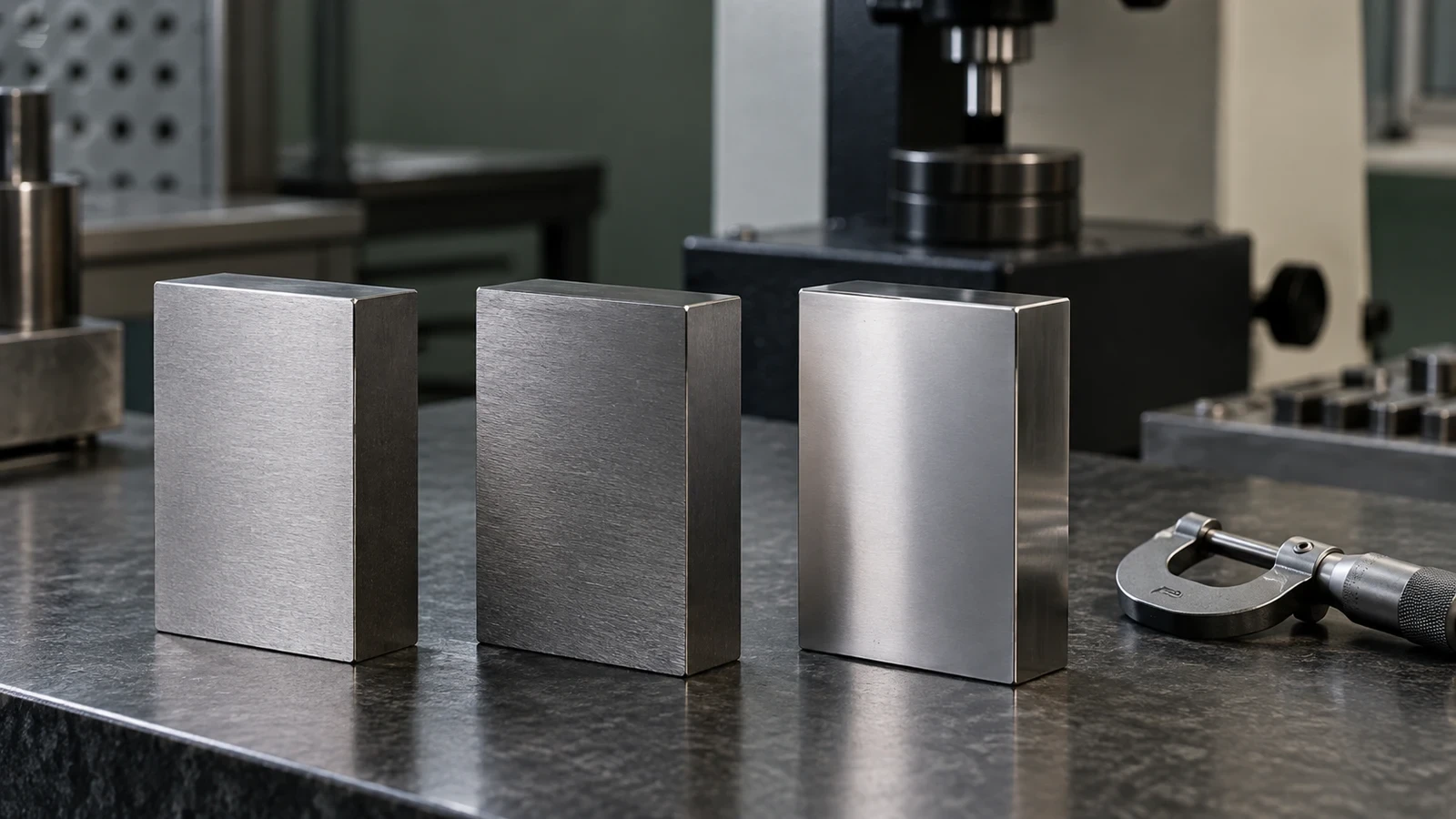
A steel enquiry needs more than a familiar grade name and three dimensions. The plate's job in the tool, its condition on arrival and the work still to be done all affect what should be ordered. Treat the material line as an instruction that purchasing, machining and inspection can each understand.
Start with the component's duty
A holder plate and an insert that forms a visible product surface may have different priorities. Write down the component's role before comparing material prices. For a molding surface, discuss the resin, any reinforcement, expected production requirement and specified finish with the designer. For a supporting plate, explain its function within the approved assembly.
BÖHLER identifies wear resistance, corrosion resistance, machinability, polishability, thermal conductivity and mechanical properties as important mold-steel selection criteria. That is why one familiar grade should not become an automatic choice for every plate in a mold. Decide which properties matter for this component and ask the responsible designer to approve the grade.
Material reference: BÖHLER — Plastic mold steels
Keep grade, condition and hardness separate
- Grade or specification identifies the requested material. Include the applicable standard or approved maker designation.
- Supply condition describes how the material is delivered, for example annealed or hardened and tempered.
- Hardness states the required range and test scale. Record whether it applies at delivery or after a later treatment.
- Preparation describes the supplied geometry and surfaces, such as a cut blank or shaped and surface-ground plate.
These are separate fields because a preparation finish cannot confirm a material grade, and a grade name does not by itself communicate every delivery requirement. Copy the approved designation accurately. If a quotation proposes an equivalent, ask for the exact proposed material and obtain approval before the order is released.
A complete material line records what the steel is, its delivered condition, the hardness requirement and the preparation scope.
Understand what prehardened means for the plan
Prehardened mold steels arrive in a hardened and tempered condition intended for machining and use within their specified application. Through-hardening grades may instead be supplied for machining followed by a planned hardening treatment. Uddeholm's mold-steel guide describes both routes. Confirm the route for the actual grade rather than assuming every mold plate needs the same sequence.
Process reference: Uddeholm — Tool Steels for Plastic Moulding
As a specific published example, Uddeholm lists Impax Supreme as prehardened mold steel supplied at 290–330 HB. That range describes that named product. It should not be copied onto every enquiry using the broad label P20, and it is not a claim that Deulec stocks that branded material. State the approved product or specification and check the supplier's delivery data.
Product-specific example: Uddeholm — Impax Supreme
Plan preparation around any later treatment
If heat treatment or another process remains after delivery, record who is responsible and what dimensions must be achieved at each handover. Ask the process planner which faces should be left for finishing. Do not turn a previous job's allowance into a universal rule for a different grade, thickness or geometry.
Use separate raw, intermediate and final dimensions on the job documents. If the supplier is delivering a prepared plate ready for your next machining operation, say what that next operation is. This avoids an order being described as finished when the purchasing and machining teams mean different stages.
Related guide: Raw Size, Shaping Size and Final Size
Confirm the actual process sequence for the approved steel. Record who is responsible for each operation and what size is required at handover.
Keep the plate connected to its material records
If your quality plan requires material or hardness documentation, request it with the enquiry. Agree how the delivered pieces will be identified and how that identification connects to the supplied records. For multiple grades in one order, a part list with a separate line for each plate is easier to check than one shared note saying ‘tool steel’.
- Give each plate a part name, drawing number and revision.
- State the approved grade, standard or maker designation without shortening it ambiguously.
- Specify the supply condition and any delivery-hardness range, including the scale.
- List dimensions, quantity, preparation and critical drawing requirements.
- Request the records and piece identification required by your quality plan.
- Record any approved substitution in the order before manufacture or dispatch.
Estimate cost after the specification is clear
Use the weight calculator with the selected material's density and the relevant blank dimensions. Then consider preparation using the agreed route and rates. A low price per kilogram is only one part of the comparison if the offers describe different materials or different supplied conditions.
In Deulec's Plates & Bars configurator, choose the available material, size, quantity and preparation. Include the additional drawing and material requirements in your quotation enquiry. Our team can confirm the offered supply; the calculators support planning and do not select or certify a steel grade.
Related guide: Compare Cost per kg and Cost per Finished Piece
Plates & Bars
Turn your requirements into a personal quotation.
Put your numbers to work.
Free tools for your next requirement.